1 Introduction
Human noise is common in coastal waters. This research focuses on the genus Hemigrapsus. We check if noise exposure from sources like floating concerts and shoreline construction causes physiological changes.
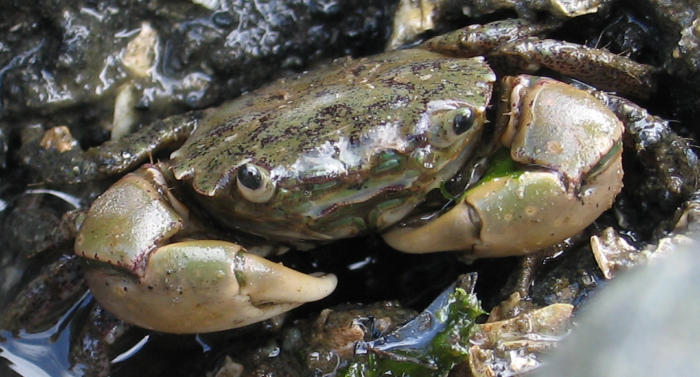 Hemigrapsus oregonensis (Yellow shore crab). This species is native to the Pacific coast and is not currently listed as endangered.
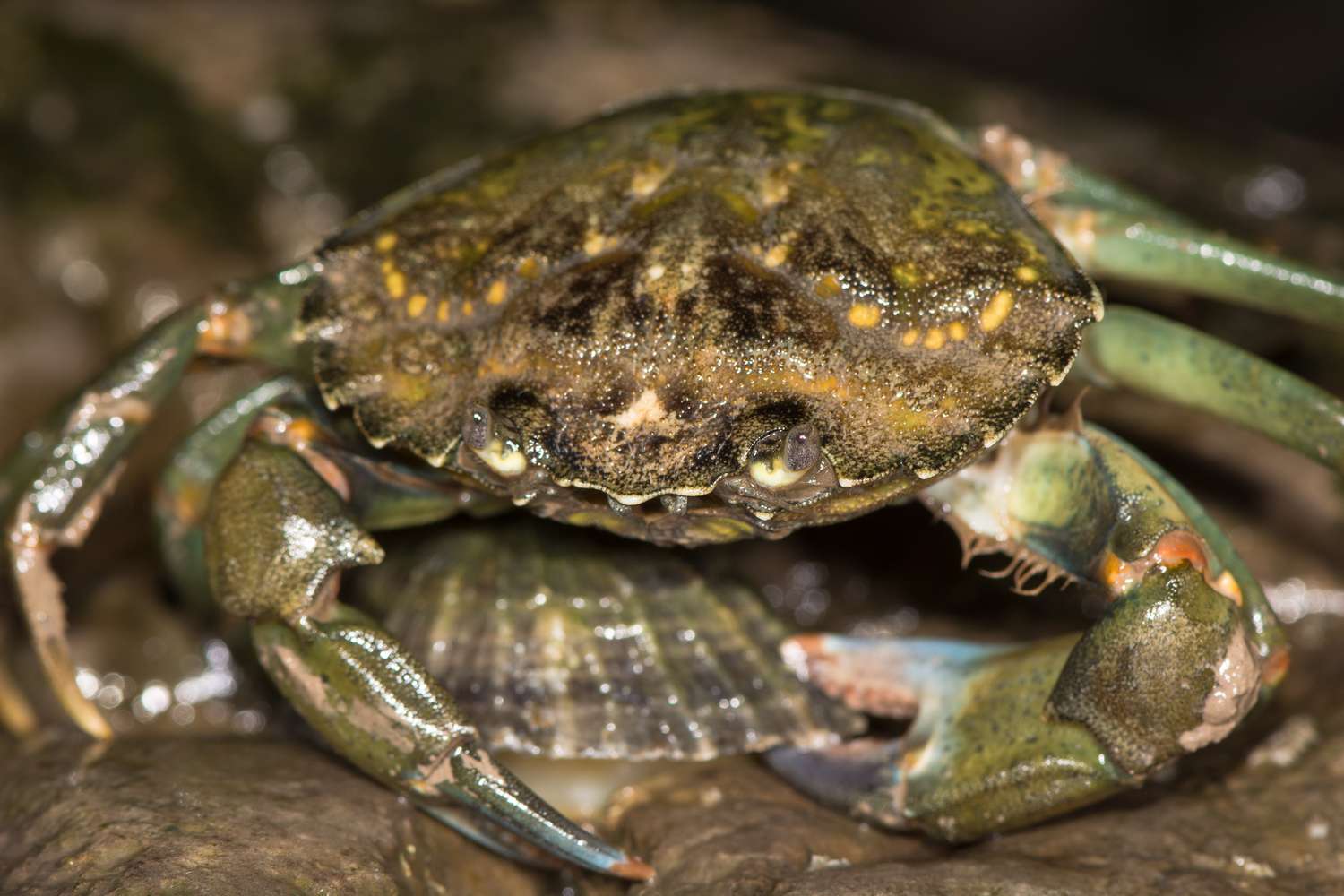 Carcinus maenas (European green crab). This species is highly invasive in North American waters and is not currently listed as endangered.
We measure two main variables to quantify stress: respiration rate and scaphognathite beat rate. The scaphognathite ventilates the gill chamber. Its speed shows metabolic demand and stress (Wale et al. 2013).
Data and methods are discussed in Section 3.
2 Literature Baselines
While we collect data for this study, Table 1 shows typical physiological ranges for shore crabs in resting conditions.
| Measurement | Typical Resting Range | Reference |
|---|---|---|
| Respiration (\(\text{MO}_2\)) | 1.5 - 2.5 \(\mu\)mol \(O_2\) / g / h | Wale et al. (2013) |
| Scaphognathite Rate | 40 - 80 beats / min | Literature Standard |
| Hemolymph Osmolarity | 900 - 1050 mOsm/kg | Regional Baselines |
3 Data & Methods
3.1 Weekly Monitoring
The exact protocol for weekly monitoring is TBD. We are currently determining the duration and frequency of respirometry tests. Methods for recording scaphognathite beats are also being finalized.
3.2 Terminal Hemolymph Sampling
At the end of the exposure period we will perform a terminal blood draw. Hemolymph will be extracted and analyzed to determine the impact on osmoregulatory capacity.
4 Conclusion
This pilot study evaluates if anthropogenic noise leads to metabolic exhaustion or osmoregulatory failure in Hemigrapsus.
References
Citation
@online{audia2026,
  author = {Audia, Ethan and Margolis, Andrew and DeLaat, Dominic and
    Lloyd, Tyler},
  title = {Anthropogenic {Noise} {Pollution} and {Physiological}
    {Stress} in {Hemigrapsus} {Crabs}},
  date = {2026-04-28},
  langid = {en},
  abstract = {This pilot study investigates the physiological stress
    responses of the intertidal crab Hemigrapsus to anthropogenic noise.
    We monitor metabolic cost through weekly measurements of respiration
    rates and scaphognathite ventilatory beat rates. The study concludes
    with a terminal hemolymph draw to assess osmoregulatory stability,
    providing a comprehensive view of how acoustic disturbance impacts
    crustacean homeostasis.}
}